
THOMAS PRINZ’S ARTWORK BRINGS A MESSAGE OF HOPE TO STEPHEN CENTER’S NEWLY RENOVATED HERO BUILDING.
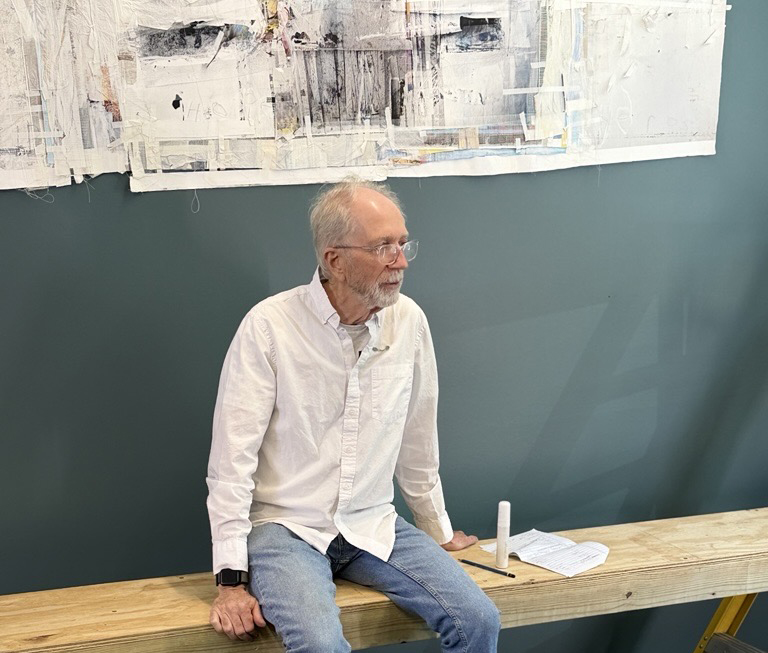
EVERY PIECE TELLS A STORY.
EVERY TORN EDGE HOLDS HOPE.
Meet the artist whose extraordinary gift transformed the walls of Stephen Center’s newly renovated HERO building into a reflection of healing, resilience, and hope.
Walk through the newly renovated HERO building and you’ll quickly notice something beyond the fresh paint and thoughtfully designed spaces.
The walls tell a story.
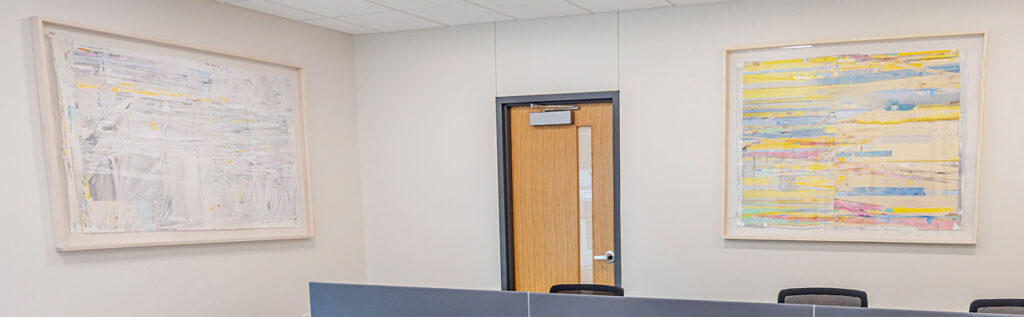
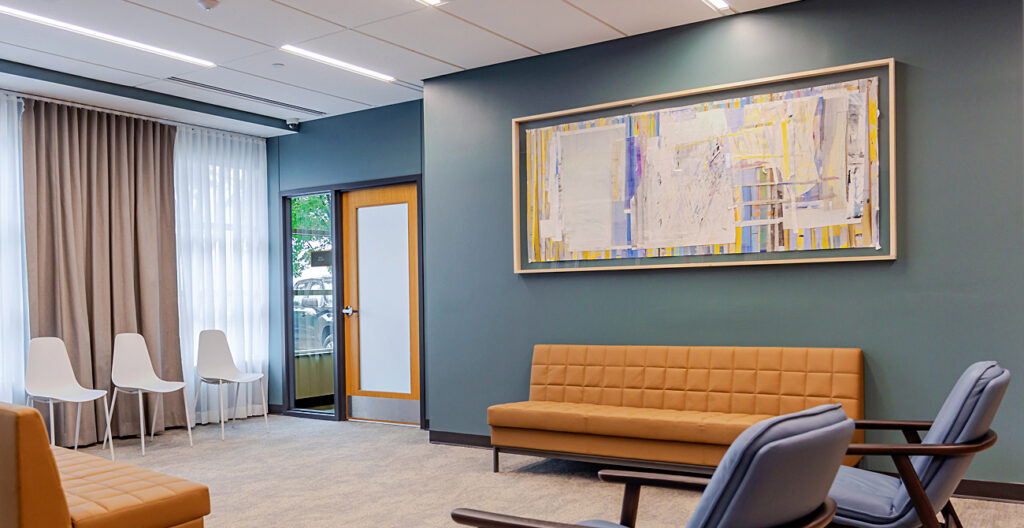
Eight striking works by Omaha artist Thomas Prinz are woven throughout the building, each one carefully placed to become part of the experience for every person who walks through its doors. Made from torn paper, stitched layers, reclaimed materials, and printed imagery, the collection reflects themes of healing, resilience, and hope.
Their location wasn’t chosen by chance.
For Prinz, one belief has guided his work for years: placement is meaning.
“I started asking myself, ‘Where could my art matter most?’” he said.
That question led him to Stephen Center.
After attending a talk about serving people on the margins of society, Prinz began thinking differently about where art belongs. Rather than hanging inside a traditional gallery, he wanted his work to live somewhere it could encourage, comfort, and inspire.
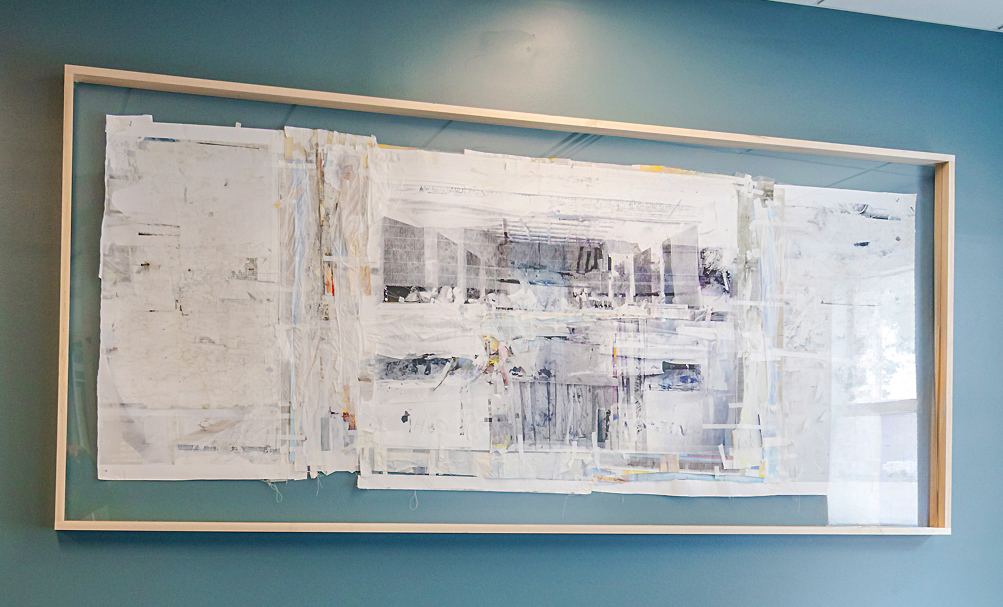
“I like taking these scraps of paper that are kind of throwaway,” Prinz said. “But they have value. When you put them all together, they can become something beautiful.”
For him, those layered, imperfect pieces became a reflection of the people HERO serves every day. Lives may feel scattered or broken, but they are never without value.
“My hope is that people look at the work and—even if they don’t fully understand it—they feel something positive,” he said. “Even if you feel like you’re falling apart or living in the margins, there’s still value.”
BUILDING SOMETHING NEW
Prinz’s path to becoming an artist was anything but traditional.
Originally trained as an architect, he spent years designing buildings before gradually discovering his own artistic voice. His signature collage style emerged almost by accident after stacking old canvases and finding that the layered edges were more compelling than the paintings themselves.
He began photographing those edges, printing them, tearing them into strips and stitching them back together.
“I like the range,” he said. “You have these precise stitches alongside rough tears.”
That balance – between order and chaos, beauty and brokenness – has become central to his work.
Throughout the collection, the torn edges remain visible rather than hidden. The stitching doesn’t erase what has been broken – it holds the pieces together. In many ways, the artwork reflects recovery itself: acknowledging the past while creating something new.
MORE THAN ART ON THE WALL
Prinz first connected with Stephen Center after a friend encouraged him to share one of his Last Supper pieces with the organization. What began as a conversation about donating a single piece of artwork quickly grew into a collection created specifically for the renovated HERO building.
That first visit held an unexpected surprise.
As Prinz walked through the building to meet with members of the Stephen Center team, he happened to pass an office and discovered a familiar face – Chief Operating Officer Shannon McNeil, his cousin. Neither knew the other was connected to Stephen Center until that moment.
“It just felt like one of those things that was meant to happen,” Prinz said.
As plans for the collection came together, some of the artwork was even refined after it had been placed in the building, allowing the architecture and surrounding spaces to influence the finished pieces.
That relationship between the artwork and the building mattered.
“Placement is meaning,” Prinz said. “Having them here, where people are rebuilding their lives, gives them so much more meaning.”
The installation reflected that philosophy. Rather than simply hanging the artwork, each piece was mounted directly to the wall before being surrounded by handcrafted frames built by a member of the Stephen Center Facilities team.
The result feels less like artwork decorating a building and more like artwork becoming part of it.
During installation, a filmmaker documenting the project described the collection as “framed prayers.”
For Prinz, the phrase captured exactly what he hoped the artwork could become.
“Each one is a prayer for somebody who encounters it.”
HOPE IN EVERY PIECE
Prinz’s artwork has been exhibited throughout Omaha and collected by businesses and private collectors. Yet he considers its home inside the HERO building one of the most meaningful places his work has ever been displayed.
Here, the artwork isn’t simply admired – it lives alongside people taking courageous steps toward healing.
Discarded materials become something beautiful. Torn pieces become whole again. Rough edges remain visible, not as flaws, but as reminders that restoration doesn’t erase the past – it transforms it.
That message echoes throughout Stephen Center.
Every day, individuals come to HERO carrying experiences that may have left them feeling broken, forgotten, or without hope. Through compassionate care, recovery services and a community that believes in second chances, they begin building something new.
Prinz’s artwork quietly reflects that same journey.
Every piece tells a story.
Every torn edge holds hope.


Leave A Comment